order business card online - Fast & Reliable Top1-5
# Order Business Card Online: Revolutionizing Networking with RFID and NFC Technology
 ## Introduction to Modern Business Cards
In today's fast-paced digital world, the traditional paper business card is undergoing a remarkable transformation. When you order business card online, you're no longer limited to static contact information printed on cardstock. The integration of RFID (Radio Frequency Identification) and NFC (Near Field Communication) technologies has created intelligent business cards that bridge the physical and digital worlds seamlessly. As someone who has attended countless networking events over the past decade, I've experienced firsthand the frustration of exchanging paper cards that often get lost, damaged, or forgotten. The moment I received my first NFC-enabled business card at a tech conference three years ago, I realized how dramatically this technology could enhance professional connections.
## The Technical Evolution: From Paper to Smart Cards
### Understanding RFID and NFC Technologies
## Introduction to Modern Business Cards
In today's fast-paced digital world, the traditional paper business card is undergoing a remarkable transformation. When you order business card online, you're no longer limited to static contact information printed on cardstock. The integration of RFID (Radio Frequency Identification) and NFC (Near Field Communication) technologies has created intelligent business cards that bridge the physical and digital worlds seamlessly. As someone who has attended countless networking events over the past decade, I've experienced firsthand the frustration of exchanging paper cards that often get lost, damaged, or forgotten. The moment I received my first NFC-enabled business card at a tech conference three years ago, I realized how dramatically this technology could enhance professional connections.
## The Technical Evolution: From Paper to Smart Cards
### Understanding RFID and NFC Technologies
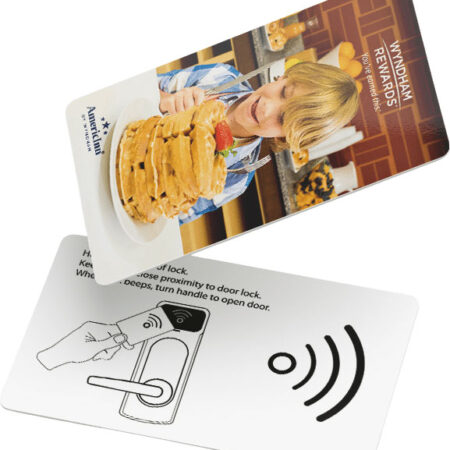 When you order business card online with embedded technology, you're essentially getting a miniature wireless communication device. RFID technology uses electromagnetic fields to automatically identify and track tags attached to objects. These tags contain electronically stored information that can be read from several meters away. NFC, a subset of RFID, operates at a shorter range (typically less than 4 inches) and enables two-way communication between devices.
 My personal experience with these technologies began unexpectedly when I ordered business card online for my consulting business. I opted for an NFC-enabled version almost on a whim, curious about how it would function. The first time I used it at a networking event, the reaction was remarkable—professionals were genuinely intrigued by the ability to simply tap my card against their smartphone to instantly receive my contact details, portfolio link, and even a personalized introductory video.
 ### Technical Specifications of Smart Business Cards
**RFID Business Card Technical Parameters:**
- Operating Frequency: 125 kHz or 13.56 MHz
### Technical Specifications of Smart Business Cards
**RFID Business Card Technical Parameters:**
- Operating Frequency: 125 kHz or 13.56 MHz
 - Read Range: Up to 1 meter (depending on reader power)
- Memory Capacity: Typically 1KB to 4KB
- Chip Type: Common models include EM4100, T5577, or HID Prox
- D
- Read Range: Up to 1 meter (depending on reader power)
- Memory Capacity: Typically 1KB to 4KB
- Chip Type: Common models include EM4100, T5577, or HID Prox
- D
RFID Frequencies: 125KHz vs 13.56MHz
RFID systems operate at different frequencies, each with distinct characteristics and applications. The two most common frequencies for card-based systems are 125KHz (Low Frequency) and 13.56MHz (High Frequency).
| Feature | 125KHz (LF) | 13.56MHz (HF) |
|---|---|---|
| Read Range | Up to 10 cm | Up to 1 meter |
| Data Transfer Speed | Slow | Fast |
| Security Level | Basic | High (encryption supported) |
| Common Standards | ISO/IEC 18000-2 | ISO/IEC 14443, ISO/IEC 15693 |
| Typical Applications | Access control, animal tracking | Payment cards, passports, smart cards |
| Interference Sensitivity | Low (works near metal/liquids) | Medium (can be affected by metals) |
Key Insight
While 125KHz RFID cards are still used for basic access control systems, 13.56MHz has become the standard for secure applications like payment systems and e-passports due to its superior security features and faster data transfer rates.
Security Features & Encryption
Modern RFID cards incorporate multiple layers of security to protect against unauthorized access, cloning, and data theft. Contrary to popular belief, properly implemented RFID systems are highly secure and can be considered as safe as traditional EMV chip cards.
Core Security Mechanisms:
- Encrypted Communication: Data transmitted between card and reader is encrypted using algorithms like AES-128 or AES-256
- Mutual Authentication: Both card and reader must authenticate each other before data exchange
- Unique Identifiers: Each card contains a globally unique ID that cannot be altered
- Anti-Cloning Protection: Advanced cards include tamper-resistant hardware that destroys data if physically compromised
- Dynamic Data: Some systems use one-time codes that change with each transaction
Security Best Practices
While RFID cards are secure, users should still take precautions: use RFID-blocking wallets for cards containing sensitive information, regularly monitor transaction histories, and immediately report lost or stolen cards to the issuer.
Applications & Use Cases
The versatility of RFID technology has led to its adoption across numerous industries. From simplifying daily commutes to securing sensitive facilities, RFID cards have become integral to modern infrastructure.
Access Control Systems
Corporate buildings, government facilities, and residential complexes use RFID cards for secure entry. Cards can be programmed with time-based restrictions, specific door access, and integration with alarm systems.
Contactless Payment
Credit and debit cards with RFID technology (often called "tap to pay") enable transactions under a certain amount without PIN verification. This technology follows EMVCo standards and includes multiple security layers.
Public Transportation
Cities worldwide use RFID cards for fare collection on buses, trains, and subways. These systems reduce boarding times, eliminate the need for exact change, and can integrate with other services like bike-sharing.
"The adoption of RFID technology in payment systems has reduced transaction times by 70% compared to traditional chip-and-PIN methods, significantly improving customer experience during peak hours."
Additional Applications:
- Healthcare: Patient identification, medication tracking, equipment management
- Education: Student IDs, library access, meal plans, attendance tracking
- Logistics: Package tracking, inventory management, supply chain optimization
- Events: Ticketing, cashless payments, access control to different areas
- Automotive: Keyless entry, ignition systems, toll collection
How RFID Cards Work
Understanding the technical operation of RFID cards helps appreciate their security and efficiency. The process involves several components working together seamlessly.
The RFID Ecosystem:
- RFID Tag/Card: Contains a microchip and antenna. Passive tags draw power from the reader's signal, while active tags have their own power source.
- RFID Reader: Emits radio waves and receives signals back from tags. Readers can be fixed (like at entry points) or handheld (for inventory management).
- Antenna: Part of both tag and reader, responsible for transmitting and receiving radio signals.
- Backend System: Database or software that processes the information received from readers and takes appropriate action (grant access, process payment, etc.).
Figure 2: The complete RFID communication cycle from card to backend system
Step-by-Step Operation:
1. Powering: When an RFID card enters the reader's electromagnetic field, the
reader's signal induces a current in the card's antenna, powering the microchip.
2. Communication Initiation: The reader sends a signal to the card, requesting
identification or data.
3. Response: The card's microchip modulates the radio waves with its stored
information and sends this modulated signal back to the reader.
4. Data Processing: The reader demodulates the signal, extracts the data, and
sends it to the backend system for verification and action.
5. Completion: Based on the backend system's response, the reader completes the
transaction (opens door, processes payment, etc.).
Frequently Asked Questions
Future Trends & Developments
RFID technology continues to evolve, with several exciting developments on the horizon that will further expand its applications and capabilities.
- Integration with IoT: RFID tags becoming part of larger Internet of Things ecosystems, enabling real-time tracking and monitoring of assets across global supply chains
- Biometric Enhancement: Cards incorporating fingerprint sensors or other biometric data for multi-factor authentication
- Blockchain Integration: Using blockchain to create immutable records of RFID transactions for enhanced traceability and security
- Energy Harvesting: Development of RFID tags that can harvest energy from ambient sources (light, vibration, temperature differences) to extend operational life
- Printed Electronics: Advancements in printing RFID circuits directly onto products and packaging, reducing costs and enabling new applications
- AI-Powered Analytics: Machine learning algorithms analyzing RFID data patterns to optimize operations, predict maintenance needs, and detect anomalies
The Road Ahead
According to industry projections, the global RFID market is expected to grow at a CAGR of 9.5% from 2023 to 2028. The integration of RFID with 5G networks, edge computing, and artificial intelligence will create new possibilities for smart cities, Industry 4.0, and personalized consumer experiences.