 ## The Technical Foundation: How Smart Cards Work
### RFID Technology Parameters
## The Technical Foundation: How Smart Cards Work
### RFID Technology Parameters
 RFID business cards typically operate at:
 - **Frequency**: 125 kHz (Low Frequency) or 13.56 MHz (High Frequency)
- **Read Range**: Up to 1 meter for passive RFID systems
- **Chip Memory**: 1KB to 4KB storage capacity
- **Chip Codes**: Common chips include EM4100, T5577, and HID Prox
*Note: These technical parameters are reference data. For specific requirements, please contact backend management.*
### NFC Technology Specifications
NFC business cards generally feature:
- **Operating Frequency**: 13.56 MHz
- **Communication Range**: Up to 10 cm (typically 4 cm for optimal performance)
- **Data Transfer Rate**: 106, 212, or 424 kbit/s
- **Chip Types**: NTAG213, NTAG215, NTAG216 (with 144 bytes, 504 bytes, and 888 bytes user memory respectively)
- **Compatibility**: ISO/IEC 14443 Type A and Type B standards
- **Frequency**: 125 kHz (Low Frequency) or 13.56 MHz (High Frequency)
- **Read Range**: Up to 1 meter for passive RFID systems
- **Chip Memory**: 1KB to 4KB storage capacity
- **Chip Codes**: Common chips include EM4100, T5577, and HID Prox
*Note: These technical parameters are reference data. For specific requirements, please contact backend management.*
### NFC Technology Specifications
NFC business cards generally feature:
- **Operating Frequency**: 13.56 MHz
- **Communication Range**: Up to 10 cm (typically 4 cm for optimal performance)
- **Data Transfer Rate**: 106, 212, or 424 kbit/s
- **Chip Types**: NTAG213, NTAG215, NTAG216 (with 144 bytes, 504 bytes, and 888 bytes user memory respectively)
- **Compatibility**: ISO/IEC 14443 Type A and Type B standards
 *Note: These technical parameters are reference data. For specific requirements, please contact backend management.*
## Creating Your Own DIY Business Cards: A Personal Journey
*Note: These technical parameters are reference data. For specific requirements, please contact backend management.*
## Creating Your Own DIY Business Cards: A Personal Journey
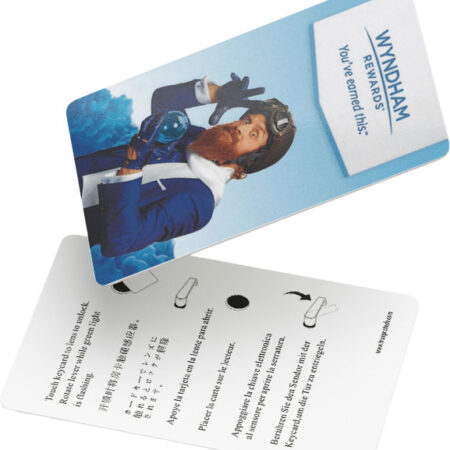 My natural inclination toward technical projects made creating DIY business cards an exciting challenge. I discovere
125KHz vs 13.56MHz
Understanding the key differences between low frequency (125KHz) and high frequency (13.56MHz) RFID technologies and their specific applications.
Security Protocols
Learn about the advanced encryption and authentication methods that make RFID cards as secure as EMV chip technology for payment systems.
EU Compliance Standards
Discover how RFID solutions comply with European regulations including GDPR, ISO/IEC standards, and payment card industry requirements.
RFID Evolution Timeline
First Commercial Applications
Initial use of RFID technology for animal tracking and limited access control systems.
Mass Adoption Begins
RFID technology expands to electronic toll collection, inventory management, and basic security systems.
Contactless Revolution
Introduction of contactless payment cards, passport RFID chips, and widespread adoption in logistics.
Integration with Mobile & IoT
RFID technology integrates with smartphones, IoT devices, and advanced security systems with enhanced encryption.