 ## Understanding Card Copier Technology
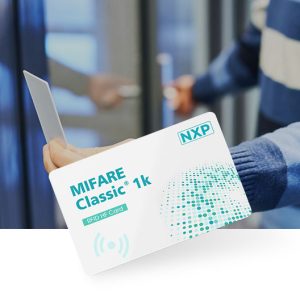
A **card copier** is a device or system designed to read, and often emulate or clone, data stored on contactless cards using Radio-Frequency Identification (RFID) or Near Field Communication (NFC) technology. While the term often carries connotations of unauthorized duplication, legitimate applications exist in security testing, access control management, and product development. This guide delves into the technical intricacies, ethical considerations, and practical applications of the technologies behind card copying.
From a personal perspective, my first encounter with a **card copier** was during a university cybersecurity workshop. We were tasked with analyzing the security of our own student ID cards. Using a simple NFC reader connected to a smartphone, I was astonished to see how easily I could read the unique identifier (UID) from my card. This hands-on experience wasn't about malicious copying; it was a powerful lesson in digital vulnerability and sparked my deep interest in RF waveform analysis and embedded systems security—a skill I've since honed into a professional aptitude.
## Understanding Card Copier Technology
A **card copier** is a device or system designed to read, and often emulate or clone, data stored on contactless cards using Radio-Frequency Identification (RFID) or Near Field Communication (NFC) technology. While the term often carries connotations of unauthorized duplication, legitimate applications exist in security testing, access control management, and product development. This guide delves into the technical intricacies, ethical considerations, and practical applications of the technologies behind card copying.
From a personal perspective, my first encounter with a **card copier** was during a university cybersecurity workshop. We were tasked with analyzing the security of our own student ID cards. Using a simple NFC reader connected to a smartphone, I was astonished to see how easily I could read the unique identifier (UID) from my card. This hands-on experience wasn't about malicious copying; it was a powerful lesson in digital vulnerability and sparked my deep interest in RF waveform analysis and embedded systems security—a skill I've since honed into a professional aptitude.
 ### How RFID and NFC Power Card Copiers
 At their core, both RFID and NFC are methods of wireless data transmission. A **card copier** typically consists of a reader/writer module and controlling software.
 **RFID (Radio-Frequency Identification):**
* **Frequencies:** Operates mainly at Low Frequency (LF 125-134 kHz), High Frequency (HF 13.56 MHz), and Ultra-High Frequency (UHF 860-960 MHz).
* **Communication:** One-way (reader to tag) or simple two-way.
* **Range:** Can vary from a few centimeters (HF) to several meters (UHF).
* **Common Uses:** Inventory tracking, animal identification, basic access control.
**NFC (Near Field Communication):**
* **Frequency:** A subset of RFID, operating exclusively at 13.56 MHz.
* **Communication:** Complex two-way communication, enabling peer-to-peer mode.
* **Range:** Very short, typically < 4 cm.
**RFID (Radio-Frequency Identification):**
* **Frequencies:** Operates mainly at Low Frequency (LF 125-134 kHz), High Frequency (HF 13.56 MHz), and Ultra-High Frequency (UHF 860-960 MHz).
* **Communication:** One-way (reader to tag) or simple two-way.
* **Range:** Can vary from a few centimeters (HF) to several meters (UHF).
* **Common Uses:** Inventory tracking, animal identification, basic access control.
**NFC (Near Field Communication):**
* **Frequency:** A subset of RFID, operating exclusively at 13.56 MHz.
* **Communication:** Complex two-way communication, enabling peer-to-peer mode.
* **Range:** Very short, typically < 4 cm.
 * **Common Uses:** Contactless payments (Apple Pay, Google Wallet), smartphone pairing, se
125KHz vs 13.56MHz
Understanding the key differences between low frequency (125KHz) and high frequency (13.56MHz) RFID technologies and their specific applications.
Security Protocols
Learn about the advanced encryption and authentication methods that make RFID cards as secure as EMV chip technology for payment systems.
EU Compliance Standards
Discover how RFID solutions comply with European regulations including GDPR, ISO/IEC standards, and payment card industry requirements.
RFID Evolution Timeline
First Commercial Applications
Initial use of RFID technology for animal tracking and limited access control systems.
Mass Adoption Begins
RFID technology expands to electronic toll collection, inventory management, and basic security systems.
Contactless Revolution
Introduction of contactless payment cards, passport RFID chips, and widespread adoption in logistics.
Integration with Mobile & IoT
RFID technology integrates with smartphones, IoT devices, and advanced security systems with enhanced encryption.